
- A typical corded or upright vacuum runs 75-82 dB, loud enough to be heard clearly through a shared wall or thin apartment door.
- A dedicated Quiet Mode on a robot vacuum can drop well below that, to a maker-claimed 45 dB on one current model, closer to normal conversation than a construction tool.
- Quiet Mode usually trades some suction for the noise cut. Expect it to handle light daily maintenance well and a heavy, deep clean less thoroughly than full power.
- Timing still matters more than the machine. Even a quiet vacuum is still audible; running it during normal daytime hours rather than very early or late avoids most complaints regardless of which unit you use.
If daytime vacuuming next to a shared wall is the concern, the gap between a typical vacuum and a quiet option is bigger than it sounds: most corded and upright vacuums run 75-82 dB, while a robot vacuum’s dedicated Quiet Mode can drop to a maker-claimed 45 dB.
If it has to be corded: the quietest corded vacuum for an apartment
If you specifically want a corded vacuum for an apartment, a canister rather than an upright is the shape to buy. Aggregated noise data describes the Miele Complete C3 Marin canister, at 66 dB (about 60 dB on its lowest setting), as “the quietest full-power vacuum in this roundup,” while the quietest corded uprights in the same data still run 78-82 dB — the source puts it bluntly: “the quietest upright anyone built is louder than every canister and cordless above it, so if quietness is genuinely your priority, an upright is the wrong shape of machine.” No corded vacuum reaches a robot’s sub-50 dB Quiet Mode; around 66 dB — roughly the level of normal conversation — is about the best a corded machine does.
We take the same makers-publish-the-dB approach in our quietest mini fridge guide, and our quiet dehumidifier comparison covers the other appliance people worry about running at night.
How loud is a typical vacuum vs. a Quiet Mode robot?
The gap is large enough to matter, not a marketing rounding error. Independent vacuum-noise data puts traditional/upright vacuums at “typically 75-82 dB,” while a vacuum is generally only considered “quiet” starting around 60-70 dB. Because decibels are measured on a logarithmic scale, a roughly 10 dB drop is perceived as about half as loud, not just “a bit less,” so the difference between a 78 dB upright and a 45 dB Quiet Mode setting is a genuinely different listening experience, not a marginal one.
| Typical corded/upright vacuum | Robot vacuum, Quiet Mode | |
|---|---|---|
| Noise | 75-82 dB | ~45 dB (maker’s claim) |
| Suction | Full power | Reduced in Quiet Mode |
| Best for | A thorough, hands-on deep clean | Light daily maintenance, run while you’re out |
| Scheduling | Manual, whenever you run it | App-based, can run while you’re not home |
What you trade for the quiet
A Quiet Mode setting on a robot vacuum generally reduces suction power along with the noise. That’s a real tradeoff: it handles everyday dust and light debris well, but a genuinely deep clean, ground-in dirt, a lot of pet hair, may still call for a higher power setting (and its higher noise) occasionally, or a supplementary corded vacuum for less frequent deep cleaning.
The practical workaround: schedule around the problem
Beyond the noise figure itself, a robot vacuum’s app-based scheduling is arguably the bigger advantage for a thin-walled apartment: you can run a cleaning cycle during hours you’re not home, sidestepping the noise question for your neighbors almost entirely, something a corded vacuum you’re physically pushing around can’t do. Combining a Quiet Mode setting with scheduling during typical daytime hours (rather than very early or late) covers most of the noise-complaint risk regardless of which specific unit you own.
Where this leaves you
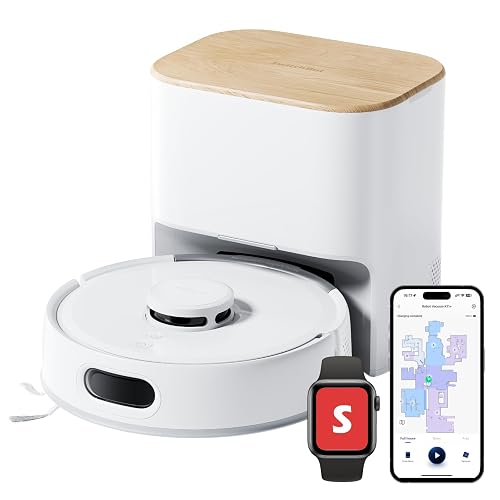
If daytime noise next to a shared wall is the concern, a robot vacuum’s dedicated Quiet Mode, like the SwitchBot K11+ at a claimed 45 dB, runs meaningfully quieter than a typical corded or upright vacuum’s 75-82 dB range. Expect reduced suction in that mode, and consider running deeper cleans on a schedule while you’re out rather than relying on Quiet Mode alone for everything.
Sources for every claim
- Home Vacuum Zone: quiet vacuum data: “typically 75-82 dB” for traditional/upright vacuums
- Amazon: SwitchBot K11+ Robot Vacuum: “45dB” Quiet Mode claim
What related fixes stack with this
- The same no-hookup, quiet-appliance idea for laundry: our compact washer guide
- The same idea for dishes: our countertop dishwasher comparison
- Masking whatever daytime noise is unavoidable: our white noise machine guide
- No window? Our portable AC for a sliding door
- Want full-size suction anyway? The corded vacuums whose makers publish their dB figures: our quietest corded vacuum comparison
Questions about quiet vacuums for an apartment
How loud is a normal vacuum compared to a quiet one?
Most corded and upright vacuums run in the 75-82 dB range, loud enough to be clearly heard through a shared wall or door. A vacuum with a genuine low-noise design, or a robot vacuum's dedicated Quiet Mode, can run well below that; the difference isn't small, since decibels are measured on a logarithmic scale where each roughly 10 dB drop is perceived as about half as loud.
Does a quiet robot vacuum clean as well as a loud upright one?
Not at the same speed. A Quiet Mode setting on a robot vacuum typically reduces suction power along with noise, so it suits light daily maintenance cleaning well but may need extra passes, or a higher (louder) power mode occasionally, for a deeper clean.
Is a robot vacuum actually quieter than a good corded vacuum?
It can be, specifically in its dedicated Quiet Mode. A maker-claimed 45 dB on a current robot vacuum model is meaningfully below the 75-82 dB typical range for corded and upright vacuums, though that's the manufacturer's own figure, not an independent lab measurement.
What time of day should I vacuum in a thin-walled building?
Normal daytime hours are the safest bet regardless of which vacuum you own; even a quiet-mode robot vacuum is audible, just less so. Check your lease or building rules for specific quiet hours, and treat 'quiet vacuum' as a way to reduce complaints, not eliminate the sound entirely.
Can I schedule a robot vacuum to run while I'm out, to avoid the noise issue entirely?
Yes, that's one of the practical advantages of a robot vacuum over a corded one: most models, including ones with a Quiet Mode, support app-based scheduling, so you can run a cleaning cycle during hours you're not home to hear it and your neighbors are less likely to be bothered by it.
Sources we checked
- Home Vacuum Zone / Quietest.org aggregated vacuum noise data. Source for the general range that "a vacuum cleaner is generally considered quiet if it operates at around 60-70 decibels," that traditional/upright vacuums are "typically 75-82 dB," and that decibels are measured on a logarithmic scale so a 10 dB difference is perceived as roughly twice as loud. Same source for the corded figures: the Miele Complete C3 Marin canister described as "the quietest full-power vacuum in this roundup" at 66 dB (60 dB on setting 1), and the upright verdict "the quietest upright anyone built is louder than every canister and cordless above it, so if quietness is genuinely your priority, an upright is the wrong shape of machine."Independent · homevacuumzone.com · checked
- Amazon: SwitchBot K11+ Robot Vacuum & Mop (ASIN B0FF41XJRR). Source for the maker-claimed "45dB" Quiet Mode noise figure, 6000Pa suction rating, self-emptying base and the $299.99 list price (with a $60 coupon reducing it to $239.99 at check time).Retailer listing · amazon.com · checked