
- No peel-and-stick or interlocking residential carpet tile line found publishes an IIC or NRC rating. Manufacturer listings (Nance Industries, Foss Floors) give thickness and material, never a sound number.
- Thickness is what predicts the noise cut, same as with any floor covering. An independent flooring retailer's own buying guide says plainly to "look for a thick tile" for sound absorption and names 5/8 to 1-inch tiles as its sound-focused line, well above the 1/4-to-3/8-inch range most renter-safe residential tiles ship in.
- If you only care about the neighbor complaint, skip carpet tiles. A rug plus a dedicated 1/4-inch felt-and-rubber rug pad, our rug and rug pad combo picks, costs less, covers only the problem area, and uses a pad purpose-built to absorb impact.
- If you're covering a whole bare floor anyway (unfinished concrete, damaged vinyl, a garage-to-living conversion) and want the noise benefit as a bonus, buy a tile with a bonded cushion layer, not a bare-backed bargain tile. The cushion is doing the absorbing, not the carpet face.
Quick answer: Usually not, if a downstairs neighbor’s complaint is the only reason you’re buying. Renter-safe carpet tiles top out around 1/4-3/8in with no published sound rating; a rug and a dedicated felt-rubber rug pad absorbs as well, over less floor, for less money. Carpet tiles earn their keep only if you’re already covering a bare floor for some other reason, and then only the cushioned kind, not a bare-backed bargain tile.
Does any carpet tile publish a sound rating?
No residential peel-and-stick or interlocking line we checked does. Nance Industries’ peel-and-stick residential tiles run 1/4-inch padded (“Kanga Hyde” cushion) up to 3/8-inch unpadded Berber/loop, and its listings give thickness, fiber type, and adhesive method, never a decibel figure, an IIC (Impact Insulation Class) number, or an NRC (Noise Reduction Coefficient) rating. Foss Floors’ peel-and-stick lines are the same: thickness and face weight, no acoustic spec. That’s not unusual for residential DIY flooring; it just means a shopper can’t compare tiles on sound the way you can compare, say, a rug pad’s stated thickness.
What we could find is a general buying rule from an independent flooring retailer that sells both residential and thicker sound-focused carpet tile: “For the maximum sound absorption, look for a thick tile, which has more material to buffer noise,” naming 5/8-, 3/4-, and 1-inch products as its own sound-absorption line. That’s the same thickness-first finding our interlocking rubber gym tile guide sourced independently, for a completely different material. Most renter-safe residential carpet tile, padded or not, sits well under that range.
Who carpet tiles are actually worth it for
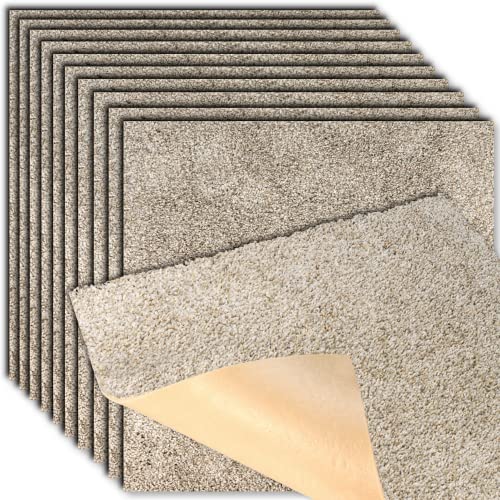
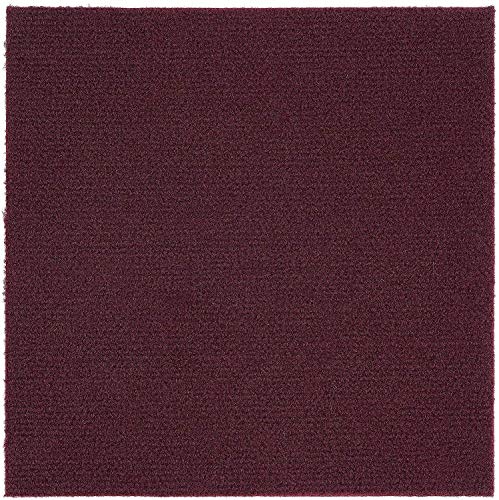
Carpet tiles make sense when you’re covering a whole bare or damaged floor for a reason that has nothing to do with a noise complaint: unfinished concrete, a scuffed vinyl rental floor you want to hide, or a garage-to-living-space conversion. In that case, the noise reduction is a real bonus, not the reason to buy, and it’s worth spending the extra few dollars a tile for one with a bonded cushion layer, like Peak Performance’s cushioned peel-and-stick tile ($74.99 on Amazon, as of September 30, 2026), over a bare-backed tile like Serenity Home’s ribbed peel-and-stick tile ($28.99 on Amazon, as of September 30, 2026), which has no separate absorbing layer at all, just carpet face bonded straight to adhesive.
If your lease bans adhesive of any kind, an interlocking EVA-foam tile system with zero glue (sold as home-gym flooring, commonly 3/8-inch) lifts up completely and leaves nothing behind, but it runs noticeably more per square foot than peel-and-stick and reads as a gym floor, not a living-room floor, so it fits an already-DIY room better than a bedroom.
Who should skip carpet tiles entirely
If your downstairs neighbor’s footstep complaint is the only problem you’re solving, skip carpet tiles and go straight to a rug and pad. A dedicated felt-and-rubber rug pad is built specifically to absorb impact: one rug pad manufacturer’s own buying guide explains the mechanism directly, that “the absorption of sound waves is achieved by the vibration of individual fibers within the felt,” and recommends its thickest 1/4-inch pad specifically for apartment footstep noise. That’s the same 1/4-inch working thickness as the best padded carpet tile on this page, achieved for one rug-sized area instead of an entire floor, at a fraction of the total cost. Our rug and rug pad combo guide has the picks.
The cheaper alternative, side by side
A rug plus a dedicated rug pad covers roughly one problem area (a living room seating zone, a bedroom walking path) for the price of one or two carpet tiles. Tiling an entire room in a cushioned peel-and-stick product, by contrast, means buying enough tiles to cover the full square footage: for a one-bedroom living room, that’s commonly 10+ tiles even at the smaller 18-inch size, well past the cost of a single rug and pad. Unless you specifically need full-floor coverage for a non-noise reason, the rug and pad wins on cost per square foot of actual noise-absorbing material.
Neither fix eliminates footstep noise. Both reduce it by adding a soft, cushioned layer between a hard floor and the sound source; a genuinely heavy footfall will still transmit some noise through either.
Sources for every claim
- Greatmats: Are Carpet Tiles Good for Soundproofing?: thickness-first buying advice, 5/8-to-1-inch sound-focused tile range
- Amazon: Peak Performance Peel and Stick Carpet Tiles with Attached Cushion: cushioned construction, $74.99 at check time
- Amazon: Serenity Home Peel and Stick Ribbed Carpet Tiles: bare-backed construction, $28.99 at check time
- Amazon: Nance Industries Peel and Stick Soft Residential Carpet Tile with Padding: 1/4-inch padding spec, named for the spec only
- RugPad.com: How to Choose the Best Rug Pad for Noise Reduction: felt-absorption mechanism, 1/4-inch pad recommended for apartment footstep noise
What related fixes stack with this
- The cheaper alternative in full: our rug and rug pad combo comparison
- A different floor-noise source entirely: our felt furniture pads guide
- If the noise is from your own equipment, not the floor itself: our interlocking rubber gym tile guide
Questions about carpet tiles and footstep noise
Do peel-and-stick or interlocking carpet tiles have a published sound rating?
Not in any residential listing we checked. Nance Industries and Foss Floors, two of the largest sellers of renter-safe carpet tile, publish thickness (1/4 to 3/8 inch is typical) and material, never an IIC or NRC number. Commercial carpet tile lines sometimes publish acoustic data; the renter-safe residential lines sold for DIY installs do not.
Are interlocking carpet tiles more renter-safe than peel-and-stick?
Interlocking foam tiles with no adhesive at all (sold for home gyms, roughly 3/8 inch EVA foam) leave zero residue and lift up completely, which is the safest option for a strict lease. Peel-and-stick tiles use a low-tack adhesive that most makers describe as residue-free on hard flooring, but always test a corner first and check your lease before covering more than a small area.
Is a thicker carpet tile always better for noise?
For the mechanism, yes. An independent flooring retailer's own buying guide says directly to "look for a thick tile" for sound absorption, naming 5/8-to-1-inch products as its sound-focused line. Most renter-safe residential tiles top out around 1/4 to 3/8 inch, including the padded kind, so even the best carpet tile option is thinner than what a retailer built specifically for sound would recommend.
Why does the rug and rug pad combo usually win over carpet tiles?
Cost per problem solved. A rug and a dedicated felt-rubber rug pad covers only the area under your feet, at a fraction of the price of tiling an entire floor, using a pad purpose-built to absorb impact rather than a carpet face with a thin cushion bonded on as a secondary feature. Carpet tiles only pull ahead when you need to cover the whole floor anyway for a non-noise reason.
Will carpet tiles fully stop a downstairs neighbor from hearing footsteps?
No product in this category claims to, and none of the manufacturers we checked publish a rating that would support that claim. Expect a real but partial reduction, the same honest ceiling every soft-flooring fix on this site carries.
Sources we checked
- Greatmats: "Are Carpet Tiles Good for Soundproofing?" Source for the direct buying advice: "For the maximum sound absorption, look for a thick tile, which has more material to buffer noise. We have many products that are ⅝, ¾, or 1 inch thick," naming thickness, not brand or backing type, as the deciding spec, the same finding our rubber gym tile guide sourced independently from a different manufacturer.Independent · greatmats.com · checked
- Amazon: Peak Performance Peel and Stick Carpet Tiles with Attached Cushion, Everest, 10 Tiles / 22.5 sq ft (ASIN B0982D82K9). Source for the attached-cushion construction, $74.99 price and in-stock status at check time. No sound, noise, IIC, or NRC rating appears anywhere on the listing.Retailer listing · amazon.com · checked
- Amazon: Serenity Home Peel and Stick 12x12 Self-Adhesive Ribbed Carpet Tiles, Burgundy (ASIN B01MZ9DLMH). Source for the bare-backed (no separate cushion layer) construction typical of the cheapest peel-and-stick tiles, $28.99 price and in-stock status at check time. No sound rating on the listing.Retailer listing · amazon.com · checked
- Amazon: Nance Industries Peel and Stick Soft Residential Carpet Tile with Padding, 24x24, Light Brown, 8 Tiles (ASIN B07D1MZZLL). Source for the 1/4-inch "Kanga Hyde" padding spec that most residential peel-and-stick lines top out at, thinner than the 5/8-to-1-inch range Greatmats names for sound absorption. Listed as out of stock at check time; named for its published padding spec only, not recommended as a pick.Retailer listing · amazon.com · checked
- RugPad.com: "How to Choose the Best Rug Pad for Noise Reduction." Source for the comparison point: a dedicated 1/4-inch felt-and-rubber rug pad is built specifically to absorb footstep impact ("the absorption of sound waves is achieved by the vibration of individual fibers within the felt"), which is the same working thickness as a padded carpet tile costs far more to achieve over a whole room.Independent · rugpad.com · checked