Shortlist, priced on Amazon
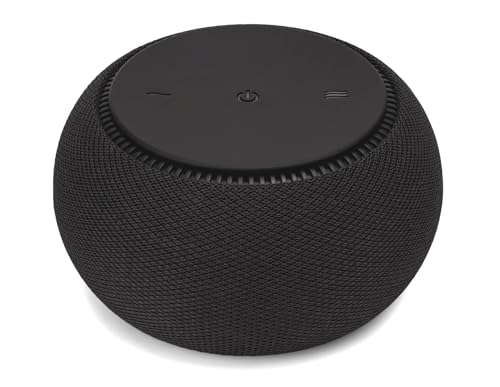
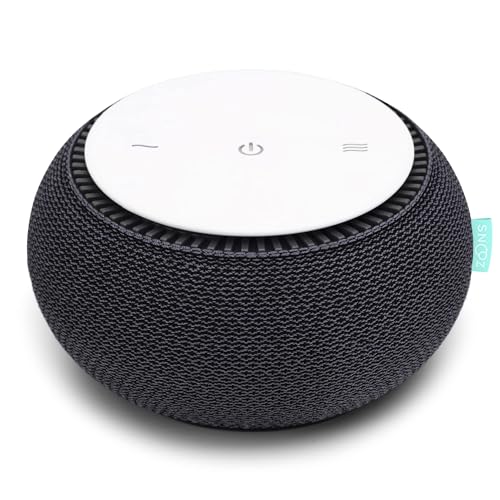
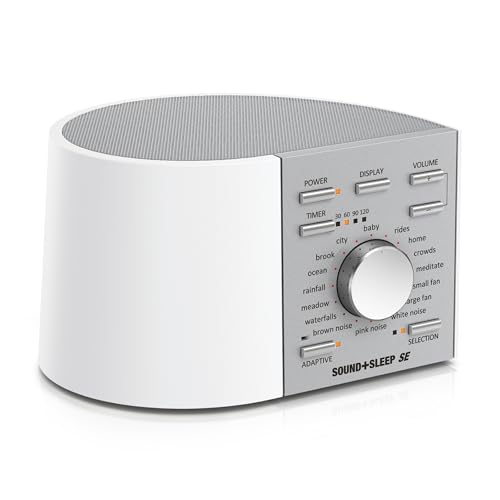
Four bass-capable sound machines from $99.99 to $199.99, ranked on tone depth, volume reach and price — prices and stock checked Oct 2, 2026.
Specs side by side
Compare all 4 side by side
| Product | Award | Best for | Price |
|---|---|---|---|
| SNOOZ Pro SNOOZ | Deepest reachable tone, best controls | Masking footsteps and neighbor music — the low, droning end of a real fan's sound, tuned from your phone or the tone knob | $119.99 Buy on Amazon — $119.99 |
| SNOOZ Original SNOOZ | Same fan bass, $20 less, no knob | The same real-fan bass as the Pro for less, if turning the outer shell by hand instead of a knob doesn't bother you | $79.99 Buy on Amazon — $79.99 |
| Sound + Sleep SE Adaptive Sound Technologies | Best if you want tracks, not fan | People who want variety — rain, ocean, brook — with adaptive volume that rises when the room gets louder | $139.95 Buy on Amazon — $139.95 |
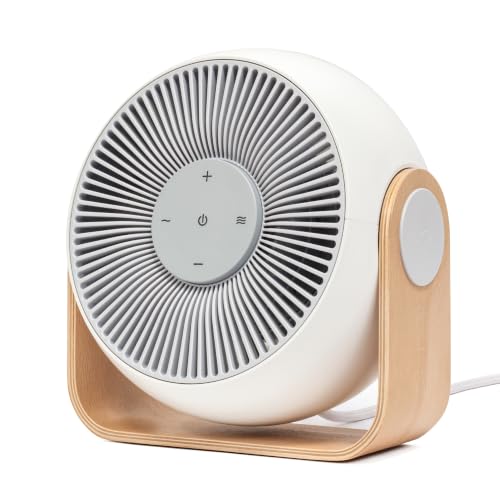 SNOOZ Breez 2 SNOOZ | Bass plus airflow for hot sleepers | Hot sleepers who want the drone and the moving air in one device — footstep masking that also cools | $199.99 Buy on Amazon — $199.99 |
Amazon prices as of Nov 23, 2026 — tap through for the live price.
Ranked for shared walls and floors
SNOOZ Pro
Buy this one if footsteps and music through the wall are the problem: deepest adjustable tone here, published volume range, and no loop to notice.
$119.99 on Amazon as of Nov 23, 2026
- Strengths
- The tone knob goes all the way to a "deep fan drone (think airplane cabin)" — the closest a bedside machine gets to the frequency range of footsteps and bass music
- Measured output published by the maker: 46-87 dBA at the device, with app scheduling, auto on/off and a travel case included at 1.2 lbs
- Trade-offs
- One sound, not a library: it is fan noise only — by design no rain, ocean or brown-noise track switching
- $119.99 is real money for a single-purpose device with no speaker playback at all
- Best for
- Masking footsteps and neighbor music — the low, droning end of a real fan's sound, tuned from your phone or the tone knob
SNOOZ Original
The value route to the same low-end: buy it if you'll set the tone once and leave it.
$79.99 on Amazon as of Nov 23, 2026
- Strengths
- "Rotate the outer shell" reaches the same "deep fan drone (think airplane cabin)" as the Pro — identical masking physics at $99.99
- Trade-offs
- Tone is set by physically rotating the shell, not a knob or the app — harder to fine-tune from bed
- No travel case included, unlike the Pro
- Best for
- The same real-fan bass as the Pro for less, if turning the outer shell by hand instead of a knob doesn't bother you
Sound + Sleep SE
Buy it for variety and adaptive volume; accept that a recorded track's low end is thinner than a real fan's drone.
$139.95 on Amazon as of Nov 23, 2026
- Strengths
- "64 Non-Looping Sounds" across 16 categories, and adaptive mode "listens and adapts to your environment" — it turns itself up when the neighbor's music does
- Richest feature set here: line-in, headphone jack, two USB charging ports
- Trade-offs
- Speaker bass is not fan bass: its low end comes from a small driver playing recordings, which thins out exactly where footsteps live
- The most expensive non-cooling pick here at $139.95, and the adaptive mic reacting all night bothers some light sleepers
- Best for
- People who want variety — rain, ocean, brook — with adaptive volume that rises when the room gets louder
SNOOZ Breez 2
The two-problem fix: buy it when the bedroom is hot AND the downstairs bass is loud. If only the noise matters, the Pro does it for $80 less.
$199.99 on Amazon as of Nov 23, 2026
- Strengths
- "One fan delivers airflow, while a separate internal fan creates white noise" — real-fan sound with "10 adjustable white noise levels" plus up to 380 CFM of cooling
- Trade-offs
- $199.99 is the most expensive pick here by $60, and the airflow fan adds its own higher-pitched layer over the drone
- Bigger footprint (11.25 in W x 11.75 in H) than the bedside pucks — it is a fan that makes noise, not a noise machine that happens to move air
- Best for
- Hot sleepers who want the drone and the moving air in one device — footstep masking that also cools
- Bass is the hardest neighbor noise to mask, and most machines can't. Speaker-based machines with recorded tracks lean bright and thin; the two SNOOZ picks here generate their sound from a real moving fan, whose low-pitched drone sits in the same frequency territory as footsteps and bass music.
- Tone control is the feature that matters, and only SNOOZ has a real one. SNOOZ's spec page describes adjusting "from a light, airy fan sound (similar to a table fan) to a deep, low-pitched hum" — that low end is what you turn up when the neighbor's subwoofer starts.
- Volume reach is published and measured: 46-87 dBA at the device. SNOOZ publishes the measured range; most rivals publish no output number at all, which is itself an answer.
- The Sound+Sleep SE at $139.95 is the alternative route: 64 non-looping tracks with adaptive volume that reacts to the noise in the room — deeper playback variety, but speaker bass, not fan bass.
When the noise through your wall is footsteps at 6 a.m. or a neighbor’s subwoofer at 11 p.m., a typical white noise machine fails you: its little speaker plays a bright, thin recording that stops right where the problem starts. The fix is a machine whose sound actually reaches down. The SNOOZ Pro generates its noise from a real fan, with a tone knob that shifts it from a light table-fan sound to a “deep fan drone (think airplane cabin)” at Amazon as of Oct 2, 2026, with a published, measured output of 46-87 dBA at the device.
Why bass is the hard part
Low-frequency sound is long-wavelength sound: it bends around edges, travels through structure, and arrives in your bedroom with most of its energy intact. High frequencies — speech sibilance, dish clinks — are easy for any machine to bury. The thud of a footstep on hardwood above you is not, and a recorded track played through a 2-inch driver has almost nothing at that end of the spectrum to fight with.
That is the entire logic of this page. Three of the four picks below make their sound by moving air with a real fan (SNOOZ’s listing: “no digital sounds, no recordings”), and the one speaker-based pick earns its slot with adaptive volume that reacts when the room gets louder instead of playing a fixed level all night.
| SNOOZ Pro | SNOOZ Original | Sound+Sleep SE | Breez 2 | |
|---|---|---|---|---|
| Price (Oct 2, 2026) | $119.99 | $99.99 | $139.95 | $199.99 |
| Sound source | Real fan | Real fan | Speaker, 64 tracks | Real fan + airflow fan |
| Deepest tone | ”Deep fan drone" | "Deep fan drone” | Track-dependent | ”Deep fan drone” + air |
| Published volume | 46-87 dBA at device | 46-87 dBA at device | Not published | Not published |
| Also cools | No | No | No | Yes, 380 CFM |
The table stacks vertically on a phone — read it one column at a time.
How to choose between them
Match the machine to the noise. Pure footsteps and music through a shared wall or ceiling: either SNOOZ puck, tone set deep, placed on the noise side of the bed — the maker’s own advice is to “place it between your bed and the noise source for best results”. Noise that changes level through the evening (music that gets louder as the night goes on): the Sound+Sleep SE’s adaptive mode is the only pick here that answers a rising noise floor without you touching anything.
Decide whether you want air. The Breez 2 is the pick when the bedroom is hot and loud at the same time — one fan for cooling, a separate one for sound, controlled together from bed. But its airflow fan adds a higher-pitched layer on top of the drone, and $199.99 buys a lot of alternatives. If temperature isn’t part of the problem, it isn’t worth $80 over the Pro.
Set expectations for placement and volume. Start the volume low and raise it until the footsteps stop registering, then stop — louder does not mean better masked, it means worse sleep in a different way. And no bedside machine deletes deep sub-bass; it raises your floor so the intrusions stop being events. If the bass is loud enough to feel in your chest, a machine plus structure fixes (a door seal, a heavy curtain, or our rug-and-pad combo guide for upstairs floors) is the realistic stack.
What owners report
Three findings from a public r/sleep archive search (Oct 2, 2026; paraphrased, no usernames): an owner asking how to schedule the machine louder for the morning window “when neighbors are coming/going and dogs are barking” — confirming both the use case and that app scheduling matters; a six-year fan-sound sleeper whose successive box fans “break or make obnoxious noises after a while”, the exact failure a sealed-fan machine removes; and a phone-app white-noise user who found recordings “just sort of not the same” as a real fan — the reason this page leans fan-first. The evidence on specifically low-frequency masking is thin: owners overwhelmingly describe voices, dogs and street noise, not sub-bass, so treat the tone-knob advantage as physics plus maker spec, not as a measured crowd result.
Where this leaves you
Buy the SNOOZ Pro if footsteps or music are stealing your sleep and you want the deepest tone with the best controls. Buy the SNOOZ Original to keep more money in your pocket for the same sound. Buy the Sound+Sleep SE if you want variety and self-adjusting volume over raw low end. Buy the Breez 2 only when hot AND loud.
Related reading
- Our white noise machine loud enough for upstairs footsteps, non-looping, under $60 picks for the budget route
- The full field: white noise machines for apartment neighbor noise
Questions about masking footsteps and bass with a sound machine
Can any sound machine actually cover footsteps and bass music?
Partly, and honest pages should say so. What a machine does is raise your bedroom's noise floor so the intrusive sound stops being the only thing in it. A real-fan machine with a deep tone setting gets you into the same low-frequency territory as footsteps; the maker's own placement advice is to "place it between your bed and the noise source for best results". Very deep sub-bass still gets through — no bedside device removes it, and any page claiming otherwise is guessing.
Why a fan instead of a speaker playing brown noise?
Because a moving fan pushes real air at low pitch, while a small speaker playing a recording rolls off at the bottom end. SNOOZ's listing is blunt about the difference: "no digital sounds, no recordings". If you already sleep with a fan purely for the sound, that is the exact use case — one r/sleep poster described phone white noise as "just sort of not the same".
How loud should it be? Is 87 dBA dangerous?
The 46-87 dBA range is measured at the device; by your pillow it is several steps lower, and nobody sleeps with the machine on their ear. Practically, start low and turn it up until the footsteps stop registering, then stop. SNOOZ's own framing is that it is "powerful enough to mask noisy neighbors, street noise, snoring, barking dogs" — masking volume, not concert volume.
Do I want the Pro or the Original?
Same fan, same tone range, same 46-87 dBA. The Pro adds an easy-set tone knob on the bottom, app control of tone and scheduling, and a travel case, for $20 more. Owners on r/sleep describe wanting scheduled volume ramps for predictable noise windows — morning dog-barking hours, for example — which is a Pro feature through the app. If you'll set it once and leave it, save the $20.
What if my problem is voices, not bass?
Voices sit higher in frequency and are easier to mask — almost any machine on our apartment neighbor-noise comparison handles them. This page is specifically for the low stuff: footsteps, subwoofers, the thud of doors. For the full field see our white noise machines for apartment neighbor noise comparison.