Shortlist, priced on Amazon
Five machines for a shared-wall apartment, checked Sept 27, 2026: the frequency range each one covers, the only independent decibel test we could find, and which pick (just one) wants a subscription.
Specs side by side
Compare all 5 side by side
| Product | Award | Best for | Price |
|---|---|---|---|
| LectroFan EVO Adaptive Sound Technologies | Best overall for through-wall noise | Masking voices and general neighbor noise with the widest sound choice | $64.95 Buy on Amazon — $64.95 |
| Yogasleep Dohm Classic YOGASLEEP | Real fan, mid-frequency focus | Muffled voices, TV chatter and other mid-frequency neighbor noise | $39.99 Buy on Amazon — $39.99 |
| Sound+Sleep SE Adaptive Sound Technologies | Adapts volume to disturbances | Unpredictable neighbors: a machine that turns itself up | $139.95 Buy on Amazon — $139.95 |
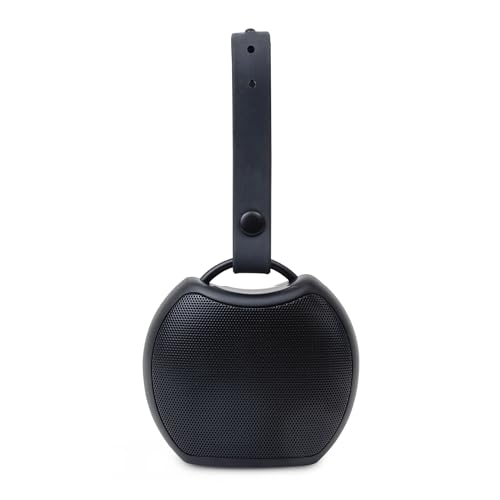 Yogasleep Rohm+ YOGASLEEP | Only one with a battery | Keeping masking sound alive through an outage, and taking it anywhere | $39.99 Buy on Amazon — $39.99 |
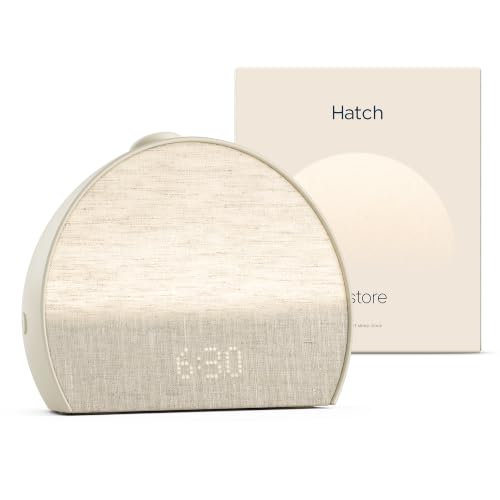 Hatch Restore 3 Hatch Baby | Sunrise alarm, subscription optional | The neighbor noise that comes with a wake-up problem too | $135.99 Buy on Amazon — $135.99 |
Amazon prices as of Nov 23, 2026 — tap through for the live price.
Ranked for shared walls and floors
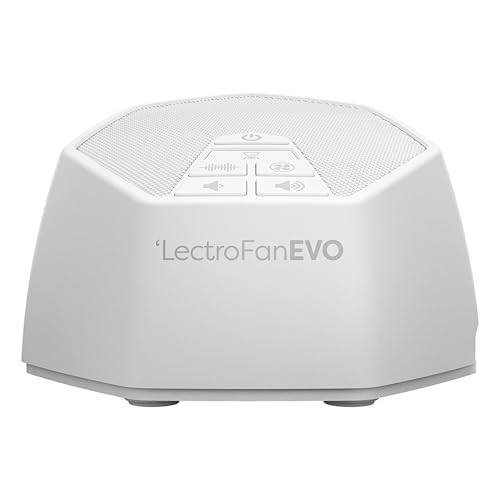
LectroFan EVO
The default pick for a shared wall: the widest frequency palette here (the maker says white, pink and brown noise plus ten fan tones), an audio jack, and no subscription anywhere in sight.
$64.95 on Amazon as of Nov 23, 2026
- Strengths
- Twenty-two non-looping sounds: the maker's own page lists "Ten fan sounds, ten noise variations, and two new ocean surf sounds", spanning "white, pink or brown noise"
- An audio-out jack for "a portable speaker, pillow speaker, or even headphones" — a pillow speaker is the one setup that puts masking sound right at your ear without filling the room
- "No motor or other internal moving parts", so there is nothing mechanically cycling next to your head all night
- Trade-offs
- The maker publishes no decibel figure for the EVO; the only independent measurement in this class is of the older LectroFan Classic, not this unit
- Amazon's price was above the maker's own store on Sept 27, 2026, and there is no battery, so the sound stops with the power
- Best for
- Masking voices and general neighbor noise with the widest sound choice
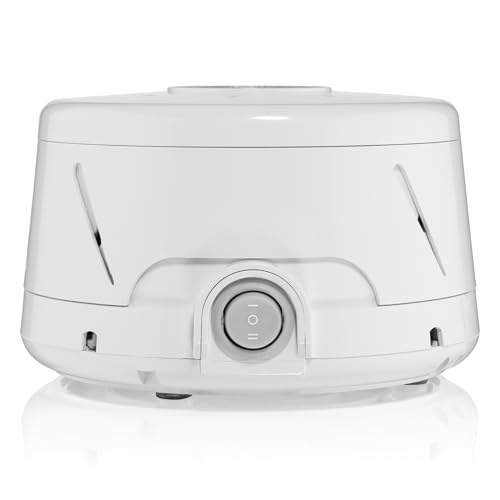
Yogasleep Dohm Classic
The frequency-honest pick for voices: its measured mid-band output overlaps where wall-muffled speech lands, and a physical fan has no loop to hear. Not the tool for low thuds.
$39.99 on Amazon as of Nov 23, 2026
- Strengths
- A real fan, which the maker calls "fan-based, natural, and non-looping" — a moving fan cannot repeat a recorded seam because nothing is recorded
- "Two speed options plus an adjustable tone dial" tune where the whoosh sits; NoisyWorld measured about 63 dB maximum at high speed (49 dB minimum) at 1 meter
- #8 in Sleep Sound Machines on Amazon on Sept 27, 2026
- Trade-offs
- That same test found the Dohm's strong output concentrated in "a very narrow range from 400-630Hz", and the reviewer concludes it "mainly masks moderate mid-frequency noises" — a heavy bass thud is not its job
- About 63 dB is the measured ceiling; a loud party next door can outrun it
- Best for
- Muffled voices, TV chatter and other mid-frequency neighbor noise
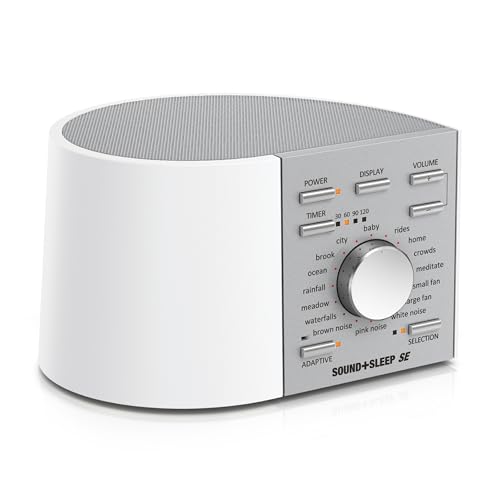
Sound+Sleep SE
The pick when the problem is spikes, not a steady murmur: it listens and raises its own volume, so a slammed door gets answered without you waking up to turn a dial.
$139.95 on Amazon as of Nov 23, 2026
- Strengths
- "Patented Adaptive Sound technology" lets the machine "intelligently listen to your environment and automatically raise volume to mask out unwanted noises" — the only pick here that reacts
- "16 sound categories, each with four variations, for 64 unique SoundStories", described as sounds that "constantly evolve and never loop"
- A 3.5mm audio input and headphone jack plus USB charging ports, at 7.5 x 5.5 x 4.5 inches
- Trade-offs
- The priciest pure sound machine here, and Amazon sat above the maker's own store price on Sept 27, 2026
- At 2.6 lbs it is the biggest sound machine on this page
- Best for
- Unpredictable neighbors: a machine that turns itself up
Yogasleep Rohm+
Buy it for the battery and the commute, not as your only wall defense.
$39.99 on Amazon as of Nov 23, 2026
- Strengths
- "Up to 59 hours of continuous white noise" per charge over USB-C, per its own listing — the only pick here that shrugs off a dead outlet or a tripped breaker
- 20 sounds ("16 more options than the original Rohm"), doubles as a Bluetooth wireless speaker, water- and dust-resistant, with a built-in lanyard
- Charges on a wireless pad if you have one, so the bedside ritual is just setting it down
- Trade-offs
- A 6-ounce speaker is a travel device first; through-wall duty is a stretch for its size
- Best for
- Keeping masking sound alive through an outage, and taking it anywhere
Hatch Restore 3
The pick if 5 a.m. garbage trucks and a 6 a.m. alarm are the same problem: a real sunrise alarm whose sound library happens to mask. Just decline the subscription unless you want it.
$135.99 on Amazon as of Nov 23, 2026
- Strengths
- "80+ science-backed sleep sounds" plus a sunrise alarm and bedside light in one 1.27 lb unit, with "most controls on the device" per the maker
- The core sounds (the listing names Green Noise, Portland Lighthouse, Fisherman's Wharf) are stored on the device and included — no subscription needed to sleep
- Sells at the same $169.99 list price in every colorway on Hatch's own store
- Trade-offs
- Setup needs the free Hatch Sleep app and "A 2.4GHz Wi-Fi connection is required" — more plumbing than any other pick here asks for
- The optional Hatch+ subscription is the only recurring cost on this page ($5.99/month or $59.99/year after a 30-day trial, per the listing)
- No decibel figure published, and masking is a side effect of a routine machine, not its main job
- Best for
- The neighbor noise that comes with a wake-up problem too
- Best overall: the LectroFan EVO, twenty-two non-looping sounds across white, pink and brown noise plus fan and ocean tones, with an audio jack for a pillow speaker, in stock Sept 27, 2026.
- For voices specifically: an independent test measured the Dohm Classic's fan output concentrated in a narrow 400-630 Hz band, the same mid-range where muffled through-wall speech mostly arrives.
- No maker here publishes a decibel figure. The only independent measurements we found: about 63 dB for the Dohm Classic and close to 80 dB for the LectroFan Classic, both at 1 meter.
- Subscriptions: four of the five picks have none. Only the Hatch Restore 3 sells one (Hatch+), and it is optional; the machine's core sounds and alarms work without it.
- Power honesty: only the Rohm+ keeps masking through a power cut, up to 59 hours per charge per its own listing; every other pick here needs a live outlet.
What masking through a wall actually takes
If the problem is a shared wall, the fix that actually works is a masking sound with the right frequency spread, not the biggest number of sounds on a box. Five machines checked on Sept 27, 2026 cover the honest range: the LectroFan EVO ($64.95 on Amazon as of Nov 23, 2026) as the default, the real-fan [Yogasleep Dohm Classic](/go?
A wall is a filter, and what survives it depends on the noise. Voices, TV dialogue and phone calls lose their high crispness passing through drywall and studs, so what reaches your side is mostly mid-range energy — the murmur everyone recognizes. Impact noise — footsteps, dropped remotes, doors — is different: it travels through the structure as vibration, sits lower in frequency, and is the hardest thing for any bedside speaker to bury.
That split is the whole reason to compare these machines on frequency instead of sound counts:
- The Dohm Classic’s output is a real fan’s whoosh. NoisyWorld measured its strong output in “a very narrow range from 400-630Hz” and concluded it “mainly masks moderate mid-frequency noises” — which is precisely the band wall-muffled voices land in.
- The LectroFan family’s digital white noise spans “from 100 Hz to 5000 Hz” in the same test (measured on the Classic), which trades that mid-band focus for coverage: more of the spectrum raised at once, including the lower end where thumps live.
- The Sound+Sleep SE takes a third approach: instead of a wider band, its “patented Adaptive Sound technology” makes it “intelligently listen to your environment and automatically raise volume to mask out unwanted noises,” per its maker.
None of this is cancellation. A 1.2-pound box raises your noise floor; it does not stop your neighbor’s subwoofer from shaking the studs. For thumps and footfalls, the durable fix is decoupling and mass at the source — see our rug and rug pad guide for footstep noise — and for the gap under your own door, a no-drill door seal kit.
The decibel problem: what is measured versus what is marketed
Not one maker on this page publishes a decibel figure for its machine. The only independent measurements we could find are NoisyWorld’s 1-meter readings: the Dohm Classic at about 63 dB maximum on high speed (49 dB minimum), and the LectroFan Classic at close to 80 dB on white noise #4, with white noise #10 reaching about 85 dBA. The EVO on this page is the same maker’s current model, but we will not transfer the Classic’s numbers to it — nobody has measured the EVO the same way.
| Pick | Maker-published dB | Independent measurement | Where its output sits |
|---|---|---|---|
| LectroFan EVO | None | None found for this model | Classic sibling measured 100-5000 Hz (NoisyWorld) |
| Dohm Classic | None | ~49-63 dB at 1 m (NoisyWorld) | Narrow 400-630 Hz band (NoisyWorld) |
| Sound+Sleep SE | None | None found | Adaptive volume instead (maker claim) |
| Rohm+ | None (“whisper-quiet to impressively robust”) | None found | Not characterized |
| Hatch Restore 3 | None | None found | Not characterized |
Two honest readings fall out of that table. First, a 63 dB ceiling (the measured Dohm) is plenty for murmur and normal speech next door, and can be outrun by a gathering — the EVO class and the adaptive SE exist for that gap. Second, “loudness” claims on sound machine listings are qualitative marketing; if a number matters to you, the Dohm and the LectroFan Classic are the only machines in this category with a published third-party measurement, which is exactly why both are picks or near-picks here.
Setup notes for a shared-wall bedroom
Put the machine between you and the wall the noise comes through, at roughly ear height, rather than across the room — the masking sound and the intrusive sound should arrive at your ear together. Two pick-specific moves are worth knowing: the EVO’s audio-out jack accepts a pillow speaker, which concentrates the masking sound where you actually sleep, and the Sound+Sleep SE’s adaptive mode is designed to sit at a comfortable base level and only jump when it hears something. If your outlet situation is unreliable, the Rohm+ is the one that survives the night unplugged.
Two years of ownership: subscriptions, power and warranties
Four of the five picks have no subscription and no app. The LectroFan EVO, Dohm Classic, Sound+Sleep SE and Rohm+ are single-purpose machines; there is nothing to sign up for, nothing to cancel, and nothing that stops working if a company changes its mind. Their makers publish no power-draw figures either, so we will not invent an electricity line item — none of them is a space heater, and all four carry one-year limited warranties per their makers (Hatch states no warranty term on the pages we checked).
The Hatch Restore 3 is the one machine here with a recurring-cost decision built in. Its listing includes “30-day free trial of Hatch+ premium content and features, for new subscribers only,” after which the optional subscription runs $5.99/month or $59.99/year, cancel anytime. The core sounds, light and alarms are stored on the device and included, so a non-subscribing owner loses premium content, not function — but the subscription’s two-year total at those rates lands in the same ballpark as a second LectroFan EVO. If pure masking is the job, the four machines without a subscription do it for the sticker price plus pennies of power.
The Rohm+ is also the page’s power robustness pick on numbers: “up to 59 hours of continuous white noise” per charge, per its own listing. Everything else here is AC-corded with no battery, so a tripped breaker at 2 a.m. means silence until morning.
Where this leaves you
Buy the LectroFan EVO ($64.95 on Amazon as of Nov 23, 2026) for the default case: the widest frequency palette, an audio jack, no subscription. Buy the Dohm Classic ($39.99 on Amazon as of Nov 23, 2026) if the noise is voices and murmur and you want the machine whose measured mid-band output matches it. Buy the Sound+Sleep SE ($139.95 on Amazon as of Nov 23, 2026) if your neighbors are unpredictable and you want the machine that turns itself up. Buy the Rohm+ ($39.99 on Amazon as of Nov 23, 2026) for outages and travel. Buy the Hatch Restore 3 ($135.99 on Amazon as of Nov 23, 2026) only if a sunrise alarm was already on your list.
Also considered (and why they didn't make the cut)
- LectroFan Classic, The actual machine in the only independent decibel test we found (close to 80 dB at 1 meter, per NoisyWorld), but its Amazon listing showed no current ship date when we checked on Sept 27, 2026. The EVO is the in-stock model from the same maker, adding two ocean sounds and the audio-out jack.
- Hatch Restore 2, Out of stock on Amazon with no featured offer when we checked on Sept 27, 2026; only a marked-up third-party offer remained. Hatch's current Restore 3 is the in-stock pick on this page at the same maker list price.
- SNOOZ Original, A real-fan machine with an app-controlled vent, $99.99 when we checked. A credible through-wall alternative, but it puts an app between you and a fan, which cuts against this page's plug-in-and-forget test.
Questions about masking neighbor noise
Can a white noise machine block out neighbors' voices through a wall?
It masks them; it does not block them. A steady sound raises your room's noise floor so conversation has less contrast against silence, which works well for muffled speech. No machine on this page claims to cancel sound, and a plug-in speaker cannot stop the vibration of a party's bass from arriving through the structure.
Which frequencies matter for voices versus footsteps?
Muffled voices through a wall arrive mostly as mid-range energy, which is why the Dohm Classic's narrow 400-630 Hz band (measured by NoisyWorld) overlaps them. Footsteps and dropped objects are impact noise, heavier in the low end, where the LectroFan family's wider 100-5000 Hz coverage does more work. No small bedside unit fully covers a heavy thud; for that, cut the noise at the source with rugs and pads.
How many decibels do these machines put out?
None of the five makers publishes a decibel figure. The only independent test we found, NoisyWorld's, measured the Yogasleep Dohm Classic at about 63 dB maximum (49 dB minimum) at 1 meter and the LectroFan Classic at close to 80 dB on white noise #4, spanning roughly 100 to 5000 Hz. Treat every other loudness claim on a sound machine listing as marketing words, not data.
Do any of these need a subscription?
Four of the five have no subscription and no app requirement at all: the LectroFan EVO, Dohm Classic, Sound+Sleep SE and Rohm+ ship complete. The Hatch Restore 3 is the exception — its listing bundles a 30-day Hatch+ trial and prices the optional service at $5.99/month or $59.99/year — but its built-in sounds, light and alarms keep working if you never subscribe.
What happens when the power goes out?
Every pick except the Rohm+ goes silent, because they are AC-powered with no battery. The Rohm+ runs up to 59 hours of continuous white noise per charge over USB-C, per its Amazon listing, which is also why it is the pick for an outlet you do not trust.
Is there a cheaper option if the noise is footsteps from above?
Yes, and we covered that separately: our under-60-dollars footsteps page compares three budget machines, including one that markets itself as non-looping, against the overhead-footsteps problem specifically. This page is the through-wall, whole-apartment version.