Shortlist, priced on Amazon
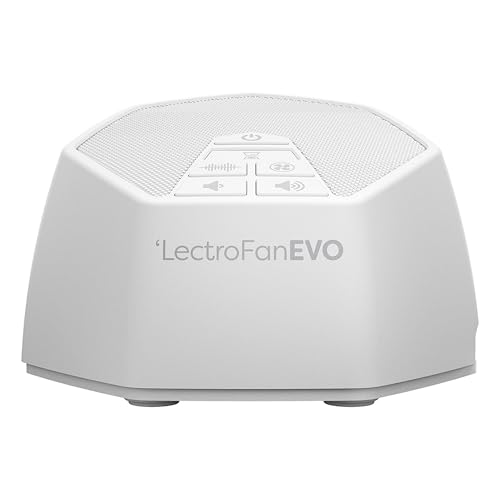
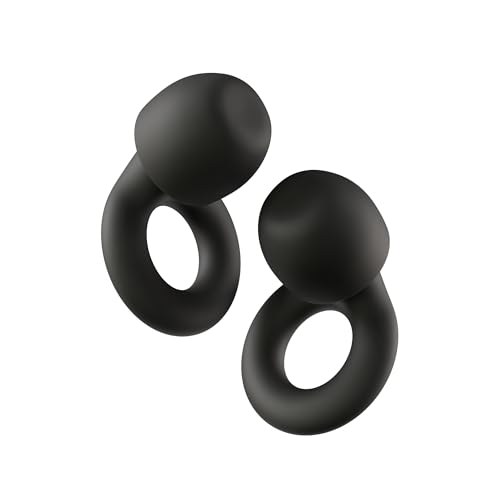
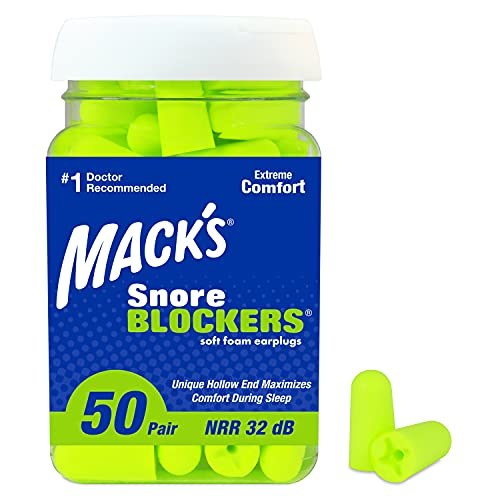
Four ear-level options for a snorer about two feet away, checked Sept 30, 2026: a masking machine with a pillow-speaker jack, two passive earplugs at different attenuation ratings, and a pair of noise-masking sleep earbuds.
Specs side by side
Compare all 4 side by side
| Product | Award | Best for | Price |
|---|---|---|---|
| LectroFan EVO Adaptive Sound Technologies | Closest masking, via pillow speaker | Masking a snore without wearing anything, using a pillow speaker to close the two-foot gap | $64.95 Buy on Amazon — $64.95 |
| Loop Quiet 2 Loop | Lowest-profile earplug | A low, reusable earplug for side-sleepers who don't want a heavy foam plug | $19.95 Buy on Amazon — $19.95 |
| Mack's Snore Blockers Mack's | Highest published NRR | The cheapest, highest-rated-NRR way to block a snore directly, one pair at a time | $14.99 Buy on Amazon — $14.99 |
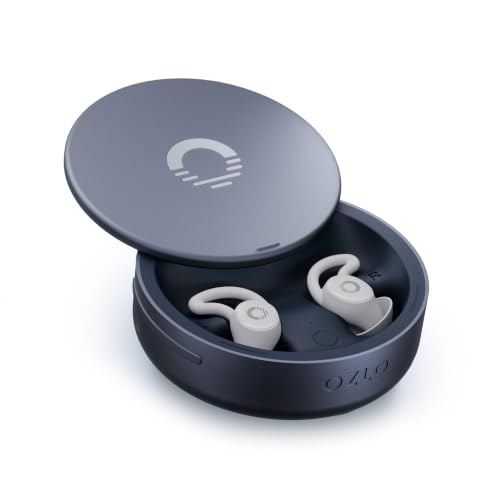 Ozlo Sleepbuds 2 Ozlo | Block plus mask, in one earbud | Combining a physical seal with sound masking when foam or silicone alone isn't enough | $237.00 Buy on Amazon — $237.00 |
Amazon prices as of Nov 23, 2026 — tap through for the live price.
Ranked for shared walls and floors
LectroFan EVO
The pick for someone who won't wear anything to bed: a pillow speaker closes the distance to the snore, in stock on Amazon, checked Sept 30, 2026.
$64.95 on Amazon as of Nov 23, 2026
- Strengths
- An audio jack "for connecting a portable speaker, pillow speaker, or even headphones" — a pillow speaker puts the masking sound centimeters from your ear, the closest a room machine can get to a snore's two-foot arrival path
- "Ten fan sounds, ten noise variations, and two new ocean surf sounds" across "white, pink or brown noise" — brown noise weights the low end, which is where a snore's rumble lives
- Nothing to wear all night, unlike the earplug and earbud picks on this page
- Trade-offs
- The maker publishes no decibel figure for the EVO, and this page will not borrow a number from a different LectroFan model
- AC-only with no battery, and the pillow speaker is a separate purchase not included in the box
- Best for
- Masking a snore without wearing anything, using a pillow speaker to close the two-foot gap
Loop Quiet 2
The comfort-first earplug: lowest bulk, four sizes, but the lowest published NRR here — pick it for fit, not for the strongest block.
$19.95 on Amazon as of Nov 23, 2026
- Listed noise
Maker's listing: "14 dB (NRR) of noise reduction", a single figure. Not our measurement. - Strengths
- The maker's own spec: "14 dB (NRR) of noise reduction" — a lab rating, and the lowest of the two earplugs on this page, which trades attenuation for a slimmer, low-profile fit
- Four ear-tip sizes (XS/S/M/L) included, flexible soft-touch silicone, and a keychain carry case, per the maker
- "100-day hassle-free returns" if the fit or the attenuation doesn't work for your ear
- Trade-offs
- The lowest NRR of the two earplug picks here — under OSHA's single-protector derating formula, (14 - 7) / 2, that is roughly 3.5 dB of estimated real-ear attenuation, not a measured reduction
- Reusable silicone needs regular cleaning, unlike a disposable foam plug
- Best for
- A low, reusable earplug for side-sleepers who don't want a heavy foam plug
Mack's Snore Blockers
The budget pick when you just want the highest lab-rated block: $14.99 for 50 pair, checked Sept 30, 2026.
$14.99 on Amazon as of Nov 23, 2026
- Strengths
- A 32 dB NRR (maker spec, ANSI S3.19 lab test) — the highest published rating of any pick on this page
- 50 pair for $14.99, checked Sept 30, 2026 — about 30 cents a pair, so a lost or crushed plug is not a real cost
- Marketed directly at this use case: the maker's page pitches the earplugs for getting a good night's sleep when sleeping with a snoring spouse
- Trade-offs
- 32 dB NRR is a lab rating, not a room measurement — OSHA's derating formula, (32 - 7) / 2, puts real-ear attenuation closer to 12.5 dB, and this page will not round that up to a bigger number
- Foam, disposable, one-size — no ear-tip sizing the way the two other worn picks offer
- Best for
- The cheapest, highest-rated-NRR way to block a snore directly, one pair at a time
Ozlo Sleepbuds 2
The upgrade pick: a physical seal plus adaptive masking audio in one earbud, at $279.00, checked Sept 30, 2026.
$237.00 on Amazon as of Nov 23, 2026
- Strengths
- The maker's stated approach is "passive noise cancellation via silicone tips" plus "adaptive noise-masking audio" — a seal and a sound, not just one or the other
- 1.6 g and 11 mm per earbud, built low-profile for side-sleeping, per the maker; four ear-tip sizes and up to 14 hours of battery per charge, with the case holding 2-3 more charges
- 1-year warranty and 30-day returns, per the maker; works in phone-free mode with pre-loaded sleep sounds once set up
- Trade-offs
- The most expensive pick on this page by a wide margin: $279.00, checked Sept 30, 2026 — more than four times the LectroFan
- The maker publishes no NRR or SNR figure — "adaptive noise-masking audio" is a described mechanism, not a measured attenuation number, and this page won't invent one
- Best for
- Combining a physical seal with sound masking when foam or silicone alone isn't enough
- The snore is close, so the fix should be too: a sleep clinic studying 515 patients recorded a mean peak-snore level of 53.2 dB with the microphone 1.2 m above the bed, against 40.8 dB of background (Nakano et al., J Clin Sleep Med, 2008) — and at two feet, that number is nearer to your ear than the clinic's meter was.
- This page swapped its picks for the two-feet constraint (Sept 30, 2026): the old lineup shared 3 of 4 products with QuietAbove's nursery and neighbor-noise pages, so it re-picked for ear-level use — masking machine, two earplug attenuation tiers, and noise-masking earbuds — with at most one ASIN in common with either sibling page.
- NRR is a lab rating, not a room measurement: Mack's Snore Blockers publish a 32 dB NRR (ANSI S3.19 lab test); OSHA's own single-protector derating formula, (NRR − 7) ÷ 2, puts real-ear attenuation closer to 12.5 dB — we show the formula instead of a marketing percentage.
- Loop Quiet 2's own spec pages disagree with each other: the maker's product page states 14 dB (NRR); the Amazon listing title states 24 dB (SNR) — different lab standards, both logged here rather than picking the flattering one.
- Recall check, logged Sept 30, 2026: no CPSC recall found for LectroFan/Adaptive Sound Technologies, Loop, Mack's/McKeon Products, or Ozlo.
- Closest to the pillow wins: the snore source is about two feet from your ear, so the fix belongs at ear level — a pillow speaker, an earplug, or an earbud — not across the room.
What two feet changes
A snorer beside you is closer than a wall or nursery monitor away: the source sits about two feet from your ear. A sleep clinic studying 515 patients measured a mean peak snoring intensity of 53.2 dB, against 40.8 dB of background (Nakano et al., 2008). This page picks for that distance: a pillow-speaker jack, two earplugs, and masking earbuds.
Blocking versus masking: the NRR method, shown honestly
Loop Quiet 2 and Mack’s Snore Blockers work by attenuation — a physical seal that reduces what reaches your eardrum. Their labels carry an NRR (Noise Reduction Rating), a standardized lab number (ANSI S3.19), not a room measurement. OSHA’s own guidance for a single hearing protector derates that lab number for real-world use: (NRR − 7) ÷ 2, in dB(A).
| Earplug | Published NRR | OSHA-derated estimate | Source |
|---|---|---|---|
| Mack’s Snore Blockers | 32 dB (maker) | ~12.5 dB | (32 − 7) ÷ 2 |
| Loop Quiet 2 | 14 dB (maker); listing title separately states 24 dB SNR | ~3.5 dB (from the NRR figure) | (14 − 7) ÷ 2 |
Read that as an estimate of attenuation at the ear canal, not a decibel figure you can subtract from the 53.2 dB mean peak snore — the two numbers come from different measurement methods and this page will not force them into one equation. The LectroFan EVO and Ozlo Sleepbuds 2 work differently again: the EVO adds masking sound (unmeasured by its maker), and Ozlo combines a passive silicone seal with “adaptive noise-masking audio” — its own described mechanism, with no NRR published to derate.
Setup at ear level
Placement still matters even at two feet. If you’re going the machine route, the LectroFan’s pillow-speaker jack is the one setup on this page that closes the gap entirely — the masking sound sits on your pillow, not across the nightstand. If you’re going the worn route, fit decides more than the spec sheet: Loop’s four tip sizes and low-profile silicone suit side-sleepers who found foam plugs uncomfortable; Mack’s tapered foam trades that comfort ceiling for the highest published NRR here; Ozlo’s silicone tips and 11 mm low-profile shape are built for the same side-sleeping problem, with masking audio layered on top. If you also fight noise through a wall or from a nursery, our apartment neighbor-noise comparison and nursery shared-wall guide cover those room-scale versions of the same problem. And if the sound keeping you up turns out to be your own appliance rather than a person — a refrigerator’s compressor humming through a studio floor — the fridge hum and vibration fix guide treats the vibration path instead of masking over it.
Ownership: power, warranties and the recall check
Power and charging differ by mechanism. The LectroFan is corded with no battery — a tripped breaker ends the mask until morning. Ozlo Sleepbuds 2 run up to 14 hours per charge with a case holding 2-3 more charges, USB-C, per the maker. Loop and Mack’s need no power at all. Warranties and returns: Loop offers “100-day hassle-free returns”; Ozlo backs its earbuds with a 1-year warranty and 30-day return window; the LectroFan carries a one-year warranty per its maker; Mack’s foam plugs are a consumable with no warranty claim to make.
The recall log, checked Sept 30, 2026: we searched the CPSC recall database for all four brands behind this page’s picks — LectroFan/Adaptive Sound Technologies, Loop, Mack’s/McKeon Products, and Ozlo/Ozlo Sleep. No recall was found for any of them.
Where this leaves you
Buy the LectroFan EVO ($64.95 on Amazon as of Nov 23, 2026) if you’d rather mask the room and run a pillow speaker than wear anything. Buy Mack’s Snore Blockers ($14.99 on Amazon as of Nov 23, 2026) for the highest published NRR here, in foam, one pair at a time. Buy Loop Quiet 2 ($19.95 on Amazon as of Nov 23, 2026) for the lowest-profile reusable fit if comfort matters more than the top attenuation number. Buy Ozlo Sleepbuds 2 ($237.00 on Amazon as of Nov 23, 2026) when you want a physical seal and adaptive masking audio together and the price doesn’t rule it out. And book the snorer a doctor’s appointment: 53.2 dB is a symptom number, and the sleep-clinic literature it comes from exists because snoring tracks with sleep-disordered breathing.
- Amazon: LectroFan EVO, Loop Quiet 2, Mack’s Snore Blockers, Ozlo Sleepbuds 2: price and stock via Amazon product data, Sept 30, 2026
Also considered (and why they didn't make the cut)
- Yogasleep Dohm Classic, A real fan sound with independent measurement, but it sits on a nightstand three feet away — this page is specifically about products worn or placed at ear level, and the Dohm's other angle is already covered on our apartment neighbor-noise comparison.
- SNOOZ Original, The only maker on QuietAbove that publishes a decibel range for a room machine, but same nightstand-distance issue as the Dohm — it duplicated 3 of this page's 4 old picks with our nursery and neighbor-noise pages, which is the repeat this page exists to fix.
- Yogasleep Rohm+, Portable and battery-powered, but no decibel figure from the maker or an independent test, and its case for this page (an outage spare) belongs on the neighbor-noise comparison where it already lives.
Questions about masking or blocking a snoring partner in bed
How many decibels does snoring actually hit?
The best published clinic number we found: researchers recording 515 sleep-study patients measured a mean peak (L1) snoring intensity of 53.2 dB, with the microphone 1.2 m above the bed and 40.8 dB of background, A-weighted (Nakano et al., J Clin Sleep Med, 2008). At two feet from the source, that number sits closer to your ear than the clinic's own meter was.
What does NRR actually mean, and can I subtract it from the snore level?
NRR (Noise Reduction Rating) is a lab number from a standardized test (ANSI S3.19), not a real-room measurement, and OSHA's own guidance says not to use it at face value: its single-protector derating formula is (NRR − 7) ÷ 2. For Mack's 32 dB NRR that is roughly 12.5 dB of estimated real-ear attenuation; for Loop Quiet 2's 14 dB NRR it's roughly 3.5 dB. Neither number can be cleanly subtracted from the Nakano snore figure, because attenuation at the ear canal and added masking sound are different mechanisms — this page shows the formula so you can judge the method, not to manufacture a precise before/after decibel claim.
Why does Loop Quiet 2 show two different noise numbers?
The maker's own product page states "14 dB (NRR)"; the Amazon listing title states "24dB SNR." NRR and SNR are different lab standards (the US ANSI test versus the European standard), and this page logs both rather than quoting only the higher-sounding figure.
Is the LectroFan EVO's pillow speaker included?
No — the EVO's audio jack accepts a separate pillow speaker, portable speaker, or headphones, per the maker. The machine itself masks the room; the jack is what lets you move the sound to your pillow if the room-level masking isn't close enough to the snore.
Were any of these products recalled?
We searched the CPSC recall database on Sept 30, 2026 for LectroFan/Adaptive Sound Technologies, Loop, Mack's/McKeon Products, and Ozlo/Ozlo Sleep. No recall was found for any of the four.
Why did this page drop the Dohm, SNOOZ and Rohm+?
Those three nightstand machines were shared across this page and two sibling QuietAbove pages (the nursery and apartment-neighbor comparisons), which made this page a near-repeat of both. This page now picks specifically for a snorer at ear-level distance — a masking machine with a pillow-speaker option, two earplug attenuation tiers, and noise-masking earbuds — with at most one ASIN in common with either sibling page. The three dropped products remain solid picks for their own use case and are named above with why they didn't fit this one.