
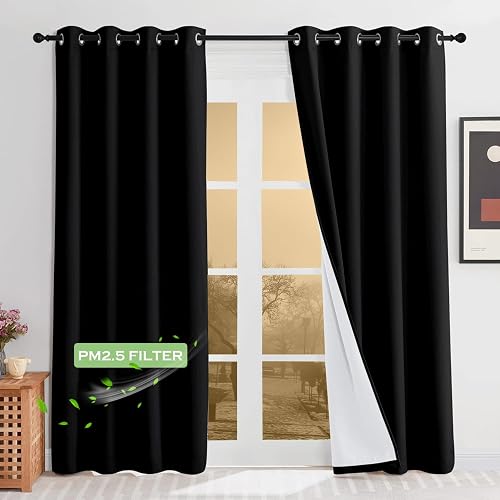
- Realistic reduction is 1-5 dB, even from the heaviest curtains on the market, per an independent acoustics-industry writeup, not the 20+ dB some marketing implies.
- Curtains don't stop bass. Traffic rumble and low-frequency noise pass through fabric because sound simply flows around a barrier that isn't dense enough to block it.
- A basic spring tension rod holds 10-15 lb; a heavy-duty steel one is rated up to 45 lb in the same source's general range, and one named heavy-duty rod is documented at 55 lb, which matters because a genuinely heavy (blackout or multi-layer) curtain can weigh more than a basic rod is rated for.
- No drilling either way. A rod rated for the curtain's real weight is the renter-safe fix; a bracket screwed into drywall is not, on this page.
If a street-facing bedroom is the problem, don’t expect a curtain alone to fix it: close the window-adjacent door gap first with our no-drill door seal kit, since that’s a specific, sourced air leak with a bigger measured impact, then add a heavy curtain on a properly rated no-drill tension rod as a second, smaller layer.
How much noise does a soundproof curtain actually block?
About 1 to 5 decibels, even from the heaviest curtains on the market. That’s the honest figure from Second Skin Audio’s independent breakdown of curtain performance, and it’s far short of the 20-plus decibel claims some product listings imply. Sound is energy traveling through air, and a curtain, however thick, doesn’t have the mass to stop it outright. As the writeup puts it, sound “simply flows around” a barrier that isn’t dense enough to block it, the same way water flows around an obstacle rather than stopping at it.
That 1-5 dB is worth having if street noise is a scratch, not a wound; it will not turn a loud intersection into a quiet room. It mostly helps with mid- and high-frequency sound and a bit of room echo, not the low, rumbling energy of trucks and buses.
Why doesn’t a curtain touch bass or traffic rumble?
It’s a mass problem, not a fabric problem. Low-frequency noise, engine rumble, bass, a passing truck, carries far more energy than it takes to stop it. Blocking that kind of sound takes a dense, heavy barrier with an air gap behind it, which is what mass-loaded vinyl (MLV) is built for and what a fabric curtain is not. A curtain can be beautiful, blackout-lined and marketed as “soundproof,” and it still won’t touch bass, because the physics doesn’t care about the marketing word on the label.
If bass through a wall or window is the actual complaint, a curtain is the wrong tool entirely. We cover what does and doesn’t help with that specific problem in our honest look at MLV behind furniture on a shared wall.
What rod actually holds a heavy curtain, without drilling?
Match the rod’s weight rating to the curtain, not the other way around. Tension rods work by spring pressure against the window frame or wall, no screws, no drilling, which is exactly what a rental needs. But that convenience comes with a real weight ceiling:
| Rod type | Typical rating | Best for |
|---|---|---|
| Basic spring tension rod | 10-15 lb | Light or single-layer curtains |
| Heavy-duty steel tension rod | up to 45 lb | Thicker, lined curtains |
| Rated heavy-duty example (Treije) | 55 lb, per an independent rod roundup | A genuinely heavy multi-layer or blackout curtain |
A “soundproof” curtain is usually a heavier, multi-layer or blackout-lined panel than a standard curtain, which is exactly the kind that can exceed a basic rod’s rating and sag in the middle or pull loose. Check the curtain’s actual listed weight, if the maker states one, against the rod’s rating before you buy either separately.
Setup notes for a rental
- Weigh (or look up) the curtain before buying a rod; “heavy duty” on the rod’s own packaging is a marketing word, not a number, so look for an explicit lb rating.
- Choose a rod rated at least a few pounds above the curtain’s weight, since a rod loaded near its limit is more likely to sag mid-span over a wide window.
- Mount the rod at its narrowest reliable span; the wider the gap between the window frame’s two sides, the more a tension rod can bow under weight.
- Treat the door and any visible frame gaps first; they’re a bigger, cheaper, more measurable fix than the curtain will be on its own.
- Set expectations: this is a quieter room, not a silent one. If the honest 1-5 dB isn’t enough, the source of the noise (the window itself, or what’s outside it) is the actual limit, not your curtain choice.
Where this leaves you
A heavy curtain on a properly rated no-drill tension rod is a real, small improvement, roughly 1 to 5 decibels by independent estimates, mostly on mid- and high-frequency noise, not bass or traffic rumble. It’s worth doing as a second layer after you’ve closed the bigger, cheaper air gaps around the door and window frame, not as the main fix for a genuinely loud street.
Sources for every claim
- Second Skin Audio: The Truth About Soundproof Curtains: “noise reduction between one and five decibels”
- HomeToSight: tension rod roundup: Treije rod “55-pound load rating”
- Rethority: tension rod weight guide: “between 10 and 45 pounds, depending on its material”
What related fixes stack with this
- The bigger, cheaper air-gap fix: our no-drill door seal kit
- Why fabric and foam don’t stop bass: our MLV behind furniture, honest take
- Hallway and building noise while you sleep: our white noise machine guide
Questions about curtains and street noise
Do soundproof curtains actually work?
They do something, just not what "soundproof" implies. An independent acoustics-industry review puts the realistic reduction from even the heaviest curtains at one to five decibels, mostly on mid- and high-frequency sound and echo. Street traffic, bass and construction noise mostly pass through anyway.
Will a curtain stop traffic bass and rumble?
No. Bass is a low-frequency, high-energy sound, and stopping it requires mass and an air gap, the kind of barrier mass-loaded vinyl or a wall provides. A fabric curtain, however heavy, doesn't have the density to block it; the sound flows around it.
What weight rating do I need on a tension rod for a heavy curtain?
Check the curtain's actual weight, not just 'heavy duty' marketing language. A basic spring tension rod is rated for roughly 10-15 lb. A true multi-layer or blackout curtain can weigh more than that, so a heavy-duty steel rod rated up to 45 lb is the safer no-drill option if your curtain is genuinely thick.
Is a tension rod actually safe for a rental, with no drilling?
Yes, that's the point of a tension rod: it grips the window frame or wall with spring pressure and rubber end caps rather than a screwed-in bracket. The tradeoff is a weight ceiling, so match the rod's rating to your curtain instead of assuming any tension rod holds any curtain.
What should I do first if street noise through the window is the real problem?
Start with the door and window air gaps before a curtain, since those are often the bigger, cheaper leak. A door seal kit like the one on our door-seal comparison closes a specific, measurable gap; a curtain's 1-5 dB is a smaller, second-layer improvement on top of that.
Sources we checked
- Second Skin Audio: "The Truth About Soundproof Curtains." Source for the realistic "noise reduction between one and five decibels" figure from even the heaviest curtains, the explanation that sound "simply flows around" a barrier without enough mass, and the recommendation to look at STC-rated products like mass-loaded vinyl for actual blocking instead of a curtain.Independent · secondskinaudio.com · checked
- HomeToSight: tension rod roundup for heavy curtains. Source for the Treije tension rod's "55-pound load rating" and "1.26-inch diameter that resists mid-span sagging", named as an example of a heavy-duty rated rod rather than a ranked pick here (no confirmed Amazon price at check time).Independent · hometosight.com · checked
- Rethority: "How Much Weight Can a Tension Rod Hold?" Source for the general range "between 10 and 45 pounds, depending on its material", and that basic spring tension rods usually max out at "10-15 pounds."Independent · rethority.com · checked
- Amazon: KGORGE Soundproof Curtains Thermal Insulated 100% Blackout 4 Layers, W52 x L84, 2 Panels (ASIN B0BV291XJM). Source for the 4-layer detachable felt liner construction, the $80.70 price, checked in stock.Retailer listing · amazon.com · checked
- CPSC recall database, full download via the SaferProducts recall API on Sept 29, 2026 (10,027 records). No recall in the database names KGORGE or the Treije tension rod, the two products this page names.Regulator · saferproducts.gov · checked